Service introduction
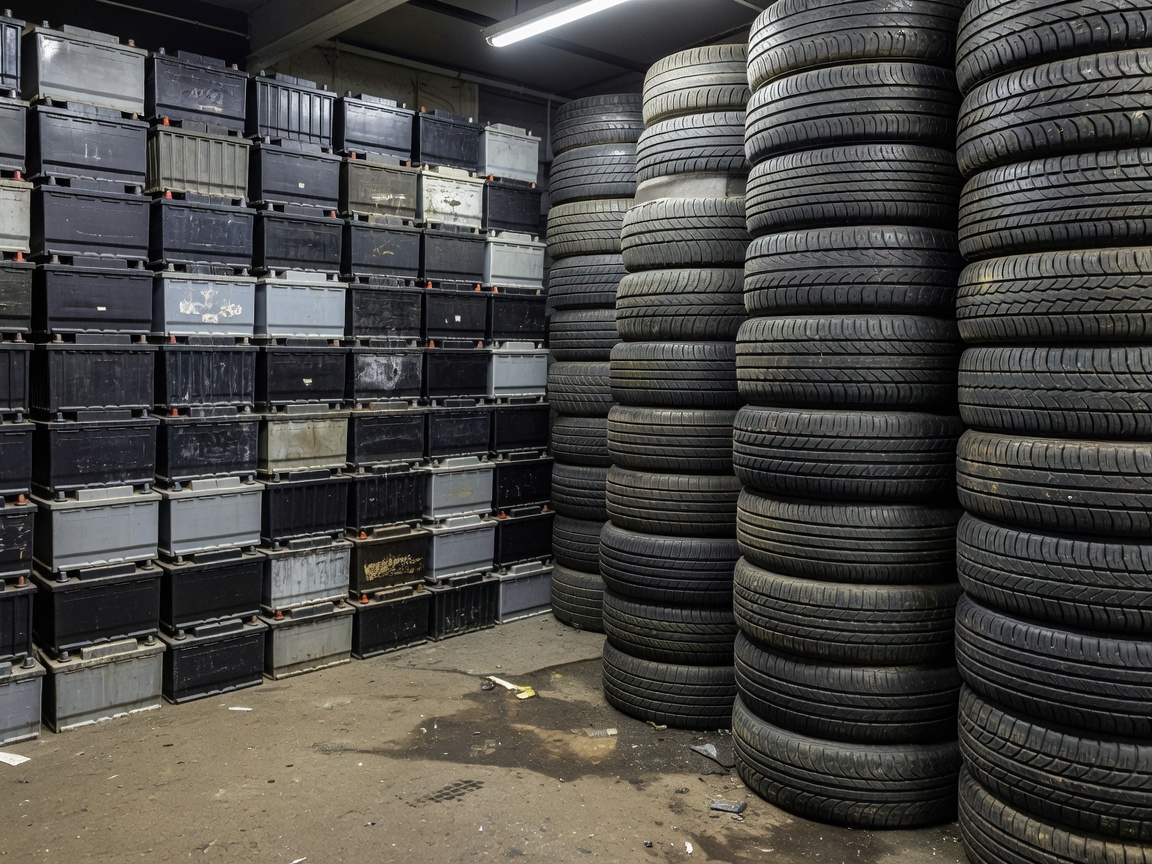
Automotive batteries, used tyres and workshop consumables often need separate consideration. This service provides a planning route for identifying the streams, confirming collection access and recording what is ready. It does not include battery dismantling, tyre processing or hazardous-material recipes.
Waste categories and scope
Relevant categories may include vehicle batteries, used tyres, filters, absorbent materials, packaging and other workshop consumables. The exact category depends on the material, condition, contamination and applicable local requirements. Unknown or damaged items should be referred to qualified personnel and the site’s safety process.
Typical areas include tyre bays, battery holding points, parts stores, wash areas and external storage. Keep categories visibly separate where required. Do not stack, open, dismantle or modify batteries or process tyres as part of routine collection preparation.
Collection planning
Planning covers the number and type of collection points, access route, vehicle position, timing and responsible site contact. Tyres may occupy more space than their material weight suggests. Batteries require careful attention to container suitability, stability and site procedures. Confirm arrangements with the appointed provider rather than relying on a generic category name.
Operational workflow
Identify the stream. Separate it from incompatible materials. Check the holding area. Confirm access and timing. Record the collection. The sequence supports consistency without claiming a particular downstream outcome.
Common issues and trade-offs
Mixed storage, blocked access, damaged containers and unrecorded temporary locations are frequent planning problems. A central point can improve control but may increase movement inside the workshop. Several points can reduce movement but require stronger labelling and checks. Choose the arrangement that fits the site procedure.
Good fit for
Tyre centres, repair workshops, fleet maintenance sites and service operations with separate battery, tyre and consumable streams.
What to prepare
Prepare material categories, location photographs, container information, access restrictions, preferred frequency and the name of the site coordinator. Related services include collection planning and waste records.